From the newsroom to the stage: Dayo’s tips on how to be a great event host
Sabrina Ramroop
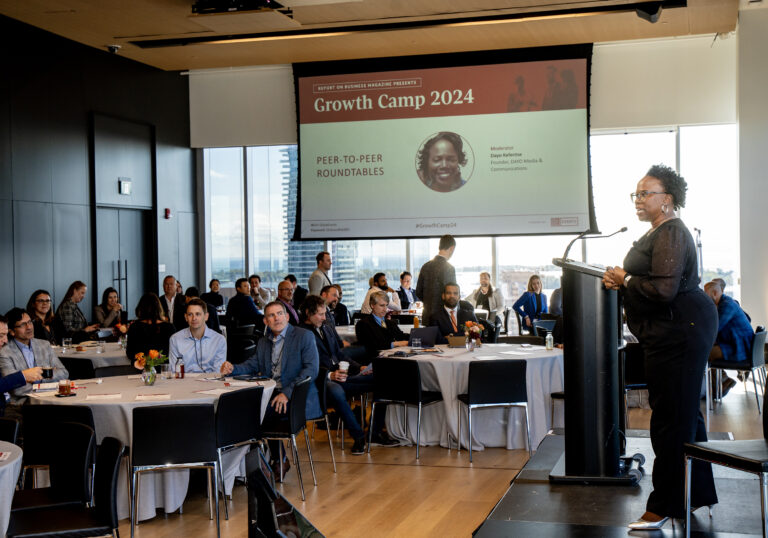
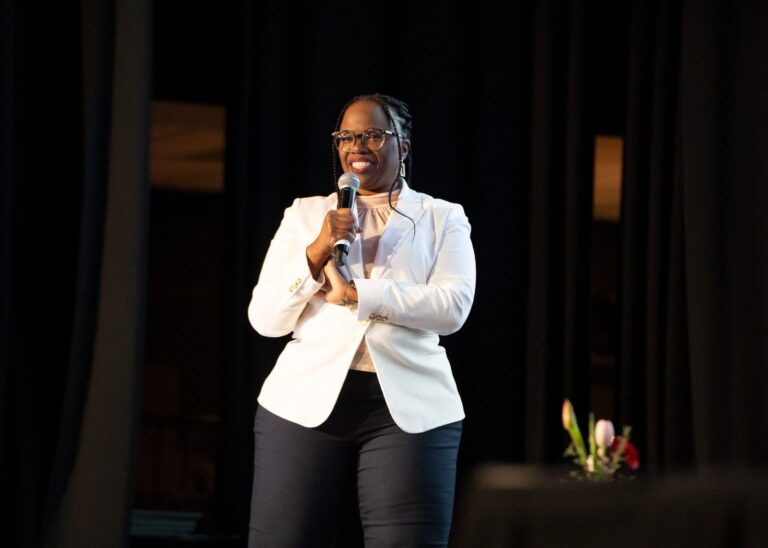
Dayo Kefentse moderating the Report on Business Magazine’s event, Growth Camp 2024
When Dayo steps onto a stage, the energy in the room shifts. Conversations quiet as she greets the audience and warms them up with some light anecdotes. Within moments, she has them: the audience is engaged, heads nod in recognition, hands go up to answer her questions. It doesn’t feel forced or scripted. The room comes alive. This is what a great host can achieve.
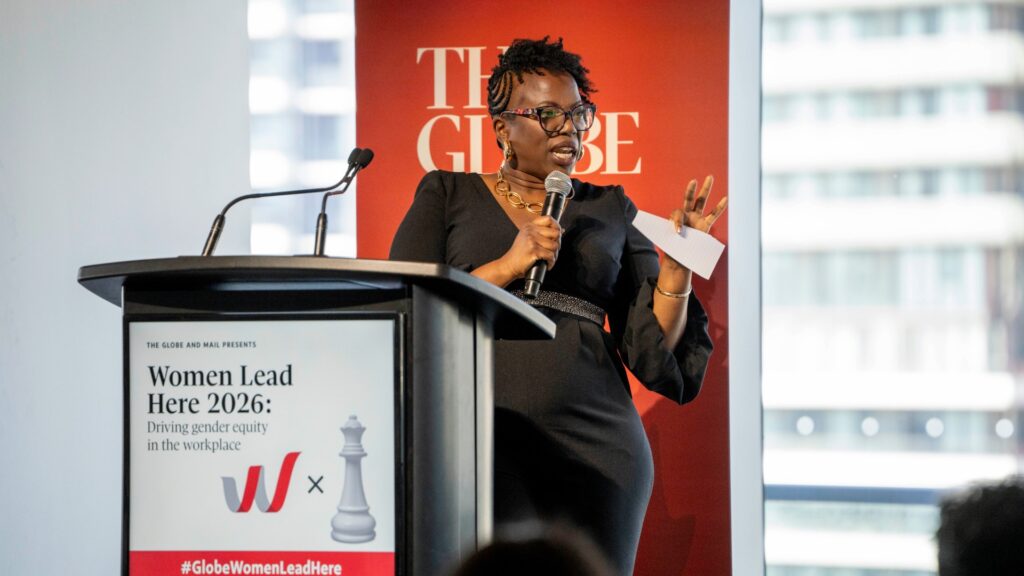
This year, Dayo Kefentse – Founder and Managing Director of DAYO Media & Communications Inc. (DM&C) – had the honour of hosting The Globe and Mail’s event, Women Lead Here 2026: Driving Gender Equity in the Workplace. As the host, Dayo engaged the audience, guiding the conversation and energizing the space for the speakers to share their stories.
For over 30 years, Dayo has built a career around elevating voices and bringing meaningful stories to the forefront. She began as a journalist and broadcaster, contributing to The Globe and Mail, CBC and the Toronto Star, to name a few.
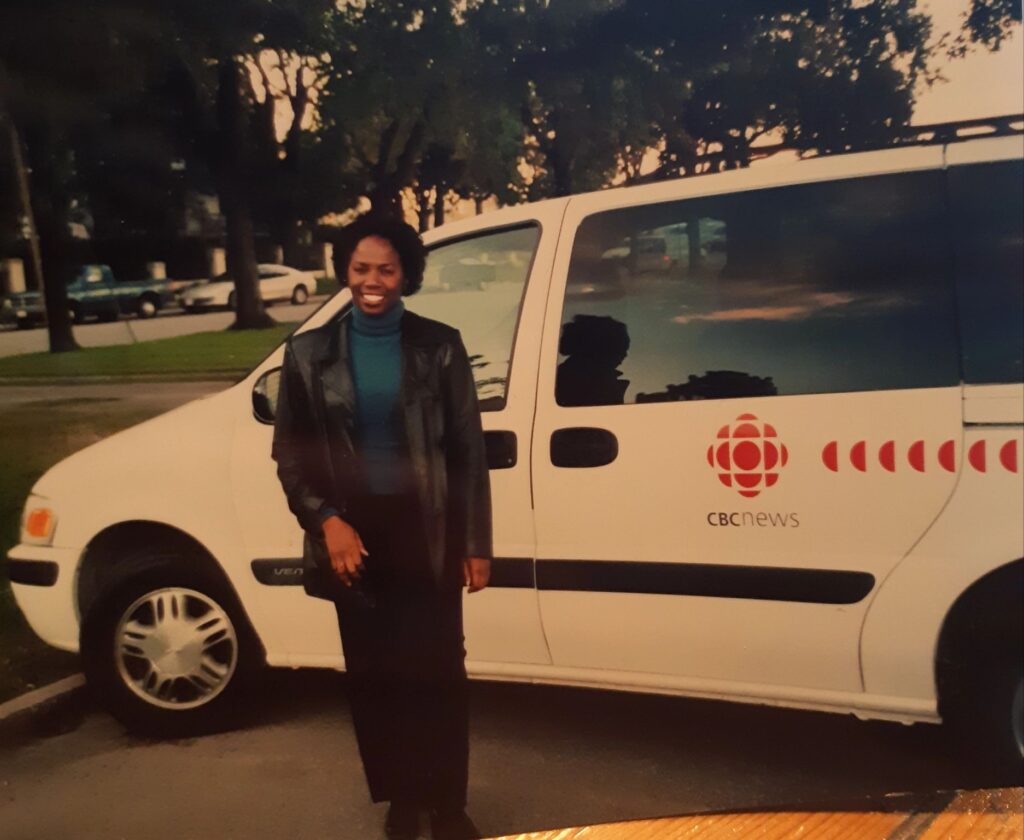
Dayo preparing to go to work on an assignment at CBC Windsor
All of those years in front of a microphone and behind the scenes taught Dayo how to engage people and tease out the stories they wanted to be told. As a journalist, she was used to being behind the microphone. But being on stage in front of hundreds of people? That wasn’t something she quite envisioned in the early 2000s.
That changed when Dayo took the stage as host for two high-profile Toronto events: The Globe and Mail’s Women Lead Her and Ernst Young’s Canada’s Entrepreneur of the Year for the Ontario region. In rooms where every word matters and every moment counts, how do you captivate your audience?
Here are Dayo’s five tips for being a great event host, whether it’s your first, or hundredth time stepping on stage.
1. Collaborate with the event planners ahead of time
Before you set foot on stage, do your homework. Learn the goals of the event and what success looks like for the client or event planning team.
“When I’m preparing to host an event, I like to sit down and ask my clients what the audience takeaway should be,” says Dayo. “This informs my approach to hosting by hinting at how involved I want the audience to be and what points I should emphasize while speaking.”
Dayo also suggests getting involved in shaping the flow of the event. Think of it as a creative partnership: the planners know the event inside and out, and you bring the stage presence and communication expertise. When both sides are aligned, it shows. You get to build an intentional experience for the audience while staying true to the event’s purpose.
Hosting is a performance, and the best performances feel both intentional and natural. Make the material yours while staying true to the event’s purpose.
Dayo introducing the speakers at The Globe and Mail’s Women Lead Here 2026 event
2. Perform, don’t present
There’s a difference between reading a script and owning a room. We’ve all sat through events where the host reads directly from the script, avoiding eye contact and speaking in a flat tone. This can leave audience members feeling disengaged and uninspired. As the host, you have control of the audience experience, even if you are reading from a script. A great host is engaging, personable and present.
Event attendee participating and asking questions during The Globe and Mail’s 2025 Women Lead Here event
At The Globe and Mail’s 2025 Women Lead Here event, Dayo made a point of directly asking the audience what they hoped to learn. The audience split into groups, chatting amongst themselves before coming back together to share their answers. What unfolded was a dynamic conversation between Dayo and the crowd where audience members felt welcomed. That simple act of inviting the audience to participate led to a noticeable increase in engagement throughout the entire event. Great performers know that it’s okay to interact with the audience and get them involved. When people feel seen and included, they lean in.
Another way to help the audience feel seen is to be relatable.
3. Bring your personal life to the stage
As a communications professional, one question Dayo asks herself while putting together a communications strategy is: what does the audience want? Typically, audiences connect withreal people and relatable stories.
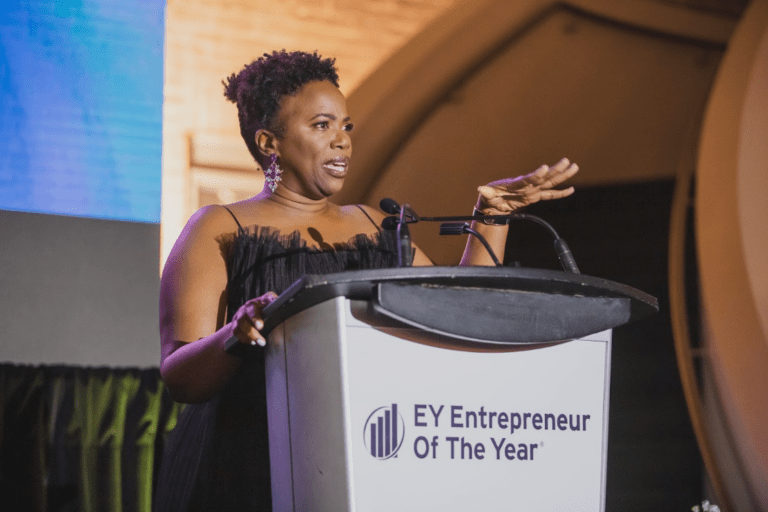
Dayo hosting Ernst Young’s Entrepreneur of the Year for the Ontario region in October 2025
When appropriate, share a personal story that ties into what’s being discussed. For example, if you’re introducing a guest that’s going to talk about marketing, you can take a moment to tell a story about your own experience related to marketing. If you’re in marketing, you could talk about your own marketing insights or funny stories with marketing fails. The key is to pick a story that is short, relatable, easy to understand and audience-appropriate.
This is where the run of show can be helpful. Take the time to review your script and adjust it to your own voice. Bonus points if you can access the speakers’ notes or slides and prepare a story relevant to their discussion or presentation.
Relatability builds trust, and trust creates the kind of environment where people feel comfortable and genuinely willing to listen. A well-placed anecdote can bring a theme to life.
It’s important to keep in mind that stories have a time and place. Your timing matters.
4. Stay on schedule
As the host, you’re responsible for keeping an eye on the clock. Some events have wiggle room while others are on a tight schedule. A great host carries authority and works with the production team to keep everything moving without the audience catching on.
This could look like stepping in to bring a segment to a close or determining how many audience questions you have time for. You may also need to remove parts of your script if it means getting the next speaker on stage. Respecting the schedule means respecting everyone in the room, including the speakers, the planners and the audience.
Dayo speaking to the crowd at The Globe and Mail’s event, Women Lead Here 2025
That said, no amount of preparation can account for everything. That’s where your ability to adapt becomes crucial.
5. Be flexible
Rarely does an event go exactly according to plan. Live shows mean live things happen. Panels and speeches run over time. Speakers cancel. An audience member has an interesting insight worth digging into. Technology glitches. When that happens, the host’s job is to keep the show moving.
Dayo shares, “Once, I was preparing to get on stage when I found out that a speaker couldn’t make it. All of a sudden, I had time to fill. Rather than getting flustered, I chose to make the most out of it. I started talking with the audience about what they’ve learned so far in the event. Not only did this fill time, but it also allowed me to get to know who was in the room and kept the momentum going.”
Your turn to take the mic
The best hosts understand the balance between preparation, presence, spontaneity and structure. These tips won’t just make you a better host, they’ll help you feel more confident and comfortable in the role, creating an experience that audiences remember long after the event ends.
Are you interested in seeing Dayo in action? Take a look at the recap from The Globe and Mail’s 2026 event Women in Leadership: Driving Gender Equity in the Workplace.